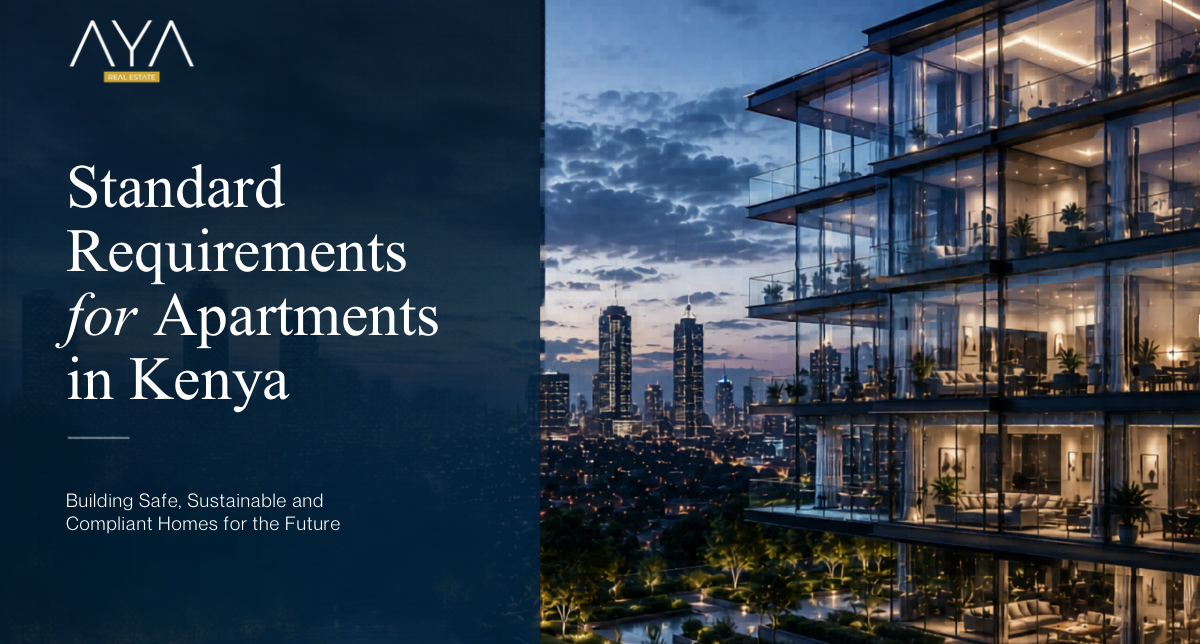
Introduction: Why Apartment Standards Matter in Kenya’s Growing Urban Landscape
Kenya’s urban population is rapidly expanding, with the World Bank estimating that over 28% of Kenyans live in urban areas, a figure projected to rise steadily. This growth is driving increased demand for apartment living, particularly in cities like Nairobi, Mombasa, and Kisumu.
As vertical development accelerates, the importance of clear apartment standards cannot be overstated. From structural safety to environmental sustainability, these standards protect residents, safeguard investments, and shape the future of Kenya’s real estate sector.
At AYA Real Estate, we provide insights that empower buyers, investors, and developers to understand what defines a high-quality, compliant apartment in Kenya.
1. The Legal Framework Governing Apartments in Kenya
Apartment construction in Kenya is regulated under a structured legal framework led by the National Construction Authority (NCA).
Key Regulations Include:
The National Building Code 2024, published as Legal Notice No. 47 of 2024, replaced the outdated 1968 building regulations and now governs the design, construction, maintenance, and demolition of buildings.
2. Structural and Construction Standards
a) Structural Integrity Requirements
Apartments must be designed to withstand environmental and structural forces such as:
The Building Code requires that:
b) Approved Materials and Construction Practices
The Code strictly prohibits the use of substandard materials. All materials must meet Kenya Standards and be suitable for their intended purpose.
Contractors must also be registered and certified by the NCA to ensure accountability and quality assurance.
3. Space, Design, and Livability Standards
The Building Code provides clear guidance on minimum space and habitability requirements.
Key Requirements:
Additionally, apartments must include:
These standards ensure apartments are not just structurally sound, but also comfortable and livable.
4. Health and Safety Standards
a) Fire and Emergency Safety
The Building Code introduces stricter safety requirements, including:
Developers must ensure:
The Code also requires buildings to incorporate proper site drainage and service areas to maintain hygiene and safety.
5. Environmental and Sustainability Requirements
The National Building Code 2024 integrates sustainability into construction by requiring:
The Code is among the few in Africa addressing climate change and sustainable construction directly.
6. Mandatory Approvals and Documentation
Before construction and occupancy, developers must obtain:
Failure to comply can result in project shutdowns, penalties, or demolition under the new Code enforcement measures.
7. Why Compliance Matters for Buyers and Investors
Choosing a compliant apartment ensures:
The introduction of stricter regulations reflects a national effort to eliminate substandard construction and improve confidence in Kenya’s real estate market.
Conclusion: Building the Future on Standards and Trust
The introduction of the National Building Code 2024 marks a new era for apartment development in Kenya, one defined by accountability, safety, and sustainability.
For buyers and investors, understanding these standards is not optional; it is critical. A compliant apartment is not just a home; it is a secure, long-term investment.
At AYA Real Estate, we are committed to helping you identify and invest in properties that meet these standards, ensuring quality, peace of mind, and compliance.